

It’s always encouraging to see mainstream media highlight the benefits of exercise. While we often share this knowledge in conferences, symposiums or within our facilities, television reaches people who may never otherwise hear these stories.
Recently, A Current Affair featured a story of “100-Year Old Gym Junkies” telling of four remarkable residents from Cardinal Gilroy Village in Merrylands, part of Southern Cross Care (NSW & ACT). All four are celebrating their 100th birthdays and continue to exercise, volunteer, socialise, set goals and live independently, motivating everyone in their community.
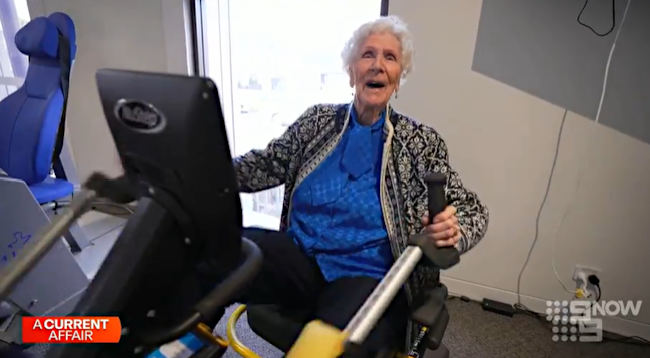
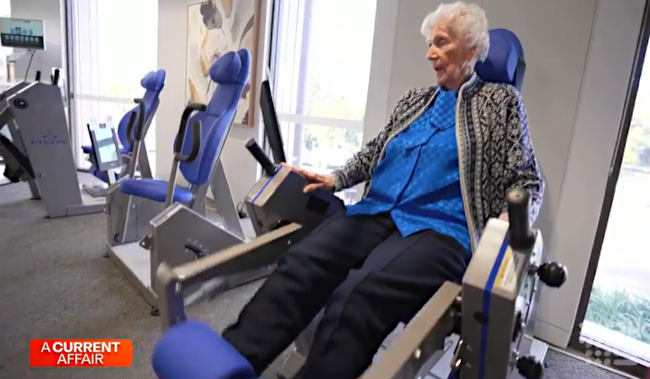
Melitta, 99, trains daily and leads the village’s virtual cycling challenge on the NuStep. Despite never having been to a gym before moving to the village—and undergoing a total hip replacement just six months ago—she continues to push herself. “You only can get what you want if you work at it,” she says.
John, 100, remains active both in the village and the broader community, attending the gym twice a week without fail.
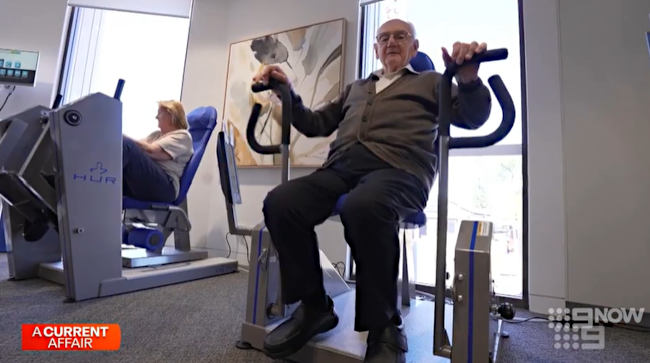
SCC (NSW & ACT) CEO Anthony Dureau describes their village as its own “blue zone,”emphasising that“ it is not about living long, it is about living well.” Their story highlights how supportive environments and appropriate gym programs help older adults stay active, connected and living life to the fullest.
What a wonderful story on the incredible residents, a vibrant retirement community and a wellness centre with appropriate gym programs that supports older people to stay active, connected and living life to the fullest.
Another recent media story covered new research from the Frazer Institute at The University of Queensland, in collaboration with the UQ Clinical Trials Capability (ULTRA) Team, Australian Frailty Network, Maastricht University (the Netherlands), University of Oulu (Finland) and Dalhousie University (Canada).
This study [Strating TR et al. (2026) Journal of Neurology, Neurosurgery & Psychiatry 2026;97:883-889] found that strength training can delay dementia diagnosis by up to six years, identifying frailty as a key early marker to early dementia diagnosis.
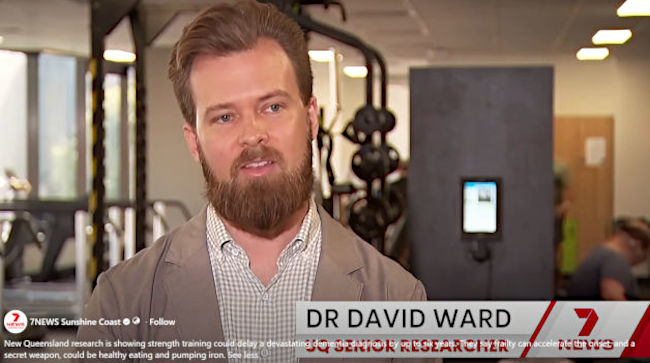
Dr David Ward from the UQ Frazer Institute said that the findings suggest frailty could be an important independent clinical marker to help diagnose and potentially treat dementia.
“Frailty has traditionally been linked to neurodegenerative conditions like dementia, but instead of just being a consequence of ageing or declining health, it appears to play its own role in shaping how dementia develops and is diagnosed,” Dr Ward said in the official press release for UQ, “Our findings show that older adults living with frailty are diagnosed with dementia 2 to 3 years earlier than those who are less frail. Importantly, people who were considered frail but did not have the usual brain abnormalities associated with dementia developed the condition 5 to 6 years earlier.”
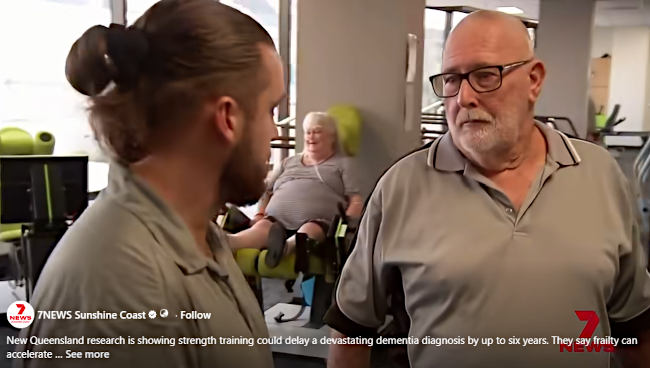
In an earlier article with Community Care Review, he stated: “Our new findings suggest that efforts to prevent or reduce frailty could delay the onset of dementia meaningfully – by a handful of years”, “One of our most interesting findings was that maintaining a low degree of frailty seemed to be necessary for individuals to fully benefit from having a brain with fewer dementia-related changes. In contrast, individuals who were living with a high degree of frailty seemed to develop dementia at younger ages, even when they had comparatively fewer brain changes.”
These findings position frailty as an early marker for dementia risk allowing us a pathway to delay the onset of dementia by preventing frailty. By engaging clinicians, medical and allied health professionals to routinely measure and monitor frailty, opportunities exist to delay the onset of dementia and improve health outcomes.
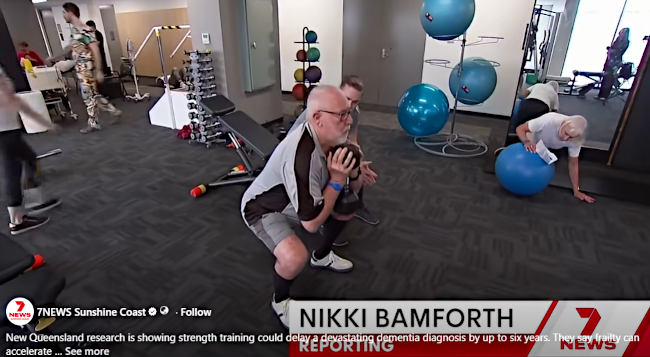
Reducing frailty can meaningfully delay dementia onset, and that individuals with higher frailty are diagnosed earlier—even when brain changes are minimal. Importantly, frail individuals without typical dementia‑related abnormalities still developed the condition five to six years sooner.
These findings reinforce that frailty is preventable and treatable. “Regular exercise—especially strength training—can delay, reduce, and in some cases improve frailty, particularly when combined with good nutrition and social engagement,” says Dr Ward.
You can read the full article in the Journal of Neurology, Neurosurgery and Psychiatry here.
It is wonderful to share these stories from our clients, showing the true impact that exercise can have on individuals, whether we talk about active ageing or exercise as medicine. It is never too late, or early, to start, the benefits are life-changing.
Best Wishes,
Dr Tuire Karaharju-Huisman
Physiotherapist, Accredited Exercise Physiologist (ESSAM), PhD (Biomechanics)
Research Lead, Area Account Manager (Vic, Tas, SA, ACT, WA, NT)
[Image credits: A Current Affair – Nine Now, Seven News]
