As we are getting ready to welcome the holiday period of rest and recovery, let us take a look at the year that was 2025!
The year started with the publication of one of the best articles on January the first, summarising the research evidence on the benefits of exercise for older adults. “Global consensus on optimal exercise recommendations for enhancing healthy longevity in older adults (ICFSR)” (M Izquierdo et al., The Journal of nutrition, health and aging, 2025, 100401,ISSN 1279-7707) provided the perfect summary for healthy longevity, or as we have called it previously, Healthspan.
By summarizing a total of 693 research articles, the authors created a guide for every practitioner and individual towards a longer and healthier life. Exercise, the “Magic Pill” provides a significant effect in the prevention, treatment and management of many chronic diseases, but has to be prescribed appropriately, paying attention to exercise modalities and intensities.
We can’t stop chronological and physiological aging, but we can change how we age. Ageing relates to physiological changes and functional decline over time, also including a higher risk of the presence of chronic diseases. However, as stated in this research summary – Lifestyle factors, notably physical activity (PA) and exercise, significantly modulate aging phenotypes. As the authors state:
“Physical activity and exercise can prevent or improve lifestyle-related diseases, extend healthspan, enhance physical function, and reduce the burden of non-communicable chronic diseases including cardiometabolic disease, cancer, musculoskeletal and neurological conditions, and chronic respiratory diseases as well as premature mortality.”
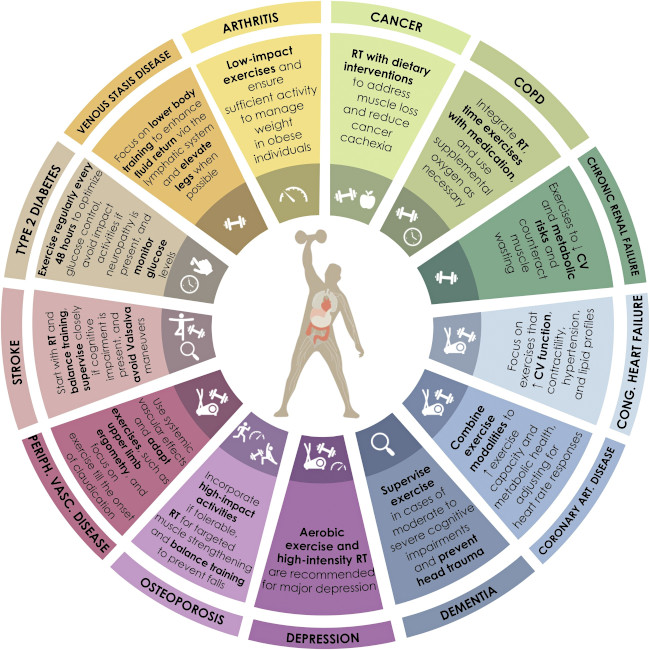
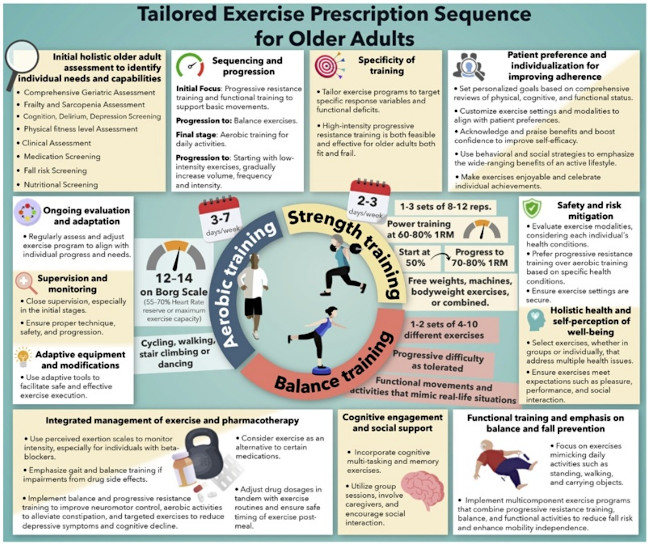
The article is filled with amazing images summarising and presenting the effect and prescription of exercise. Figure 1 (above) alone summarises the exercise recommendations for 13 different illnesses, covering cardiovascular, musculoskeletal and metabolic diseases, among others. This image presents in one look the true value of “Exercise as Medicine”, with the benefits applicable for so many illnesses that are common in our society, influenced by our high level of inactivity. You can read a summary and more in one of my first blogs of 2025, or you can access the original paper here.
Some of the authors visited the topic in another article later in the year. In the current article the authors discuss the integration of exercise and medication management in geriatric care to discuss a holistic strategy to enhance health outcomes and reduce polypharmacy (Izquierdo, Mikel et al. (2025) The Lancet Healthy Longevity, Volume 6, Issue 9, 100763). The authors discuss many drug reactions and interactions, and provide an expanded guidance on the topic, including exercise prescription to enhance the effects and to minimise side-effects of drugs.
The abstract of this article summarises the effect of exercise in collaboration with medication in the treatment of common chronic conditions:
- Exercise is an alternative to less effective or unsafe medications for many conditions, such as depression, anxiety, insomnia, osteoarthritis, and dementia.
- Exercise is an important addition to pharmacotherapy for many chronic conditions such as coronary artery disease, heart failure, diabetes, osteoporosis, cancer, and chronic obstructive pulmonary disease.
- Adding exercise to drug management can ease adverse drug reactions, improve medication compliance, and reduce the adverse effects of sedentary behaviour and ageing processes on chronic disease expression.
- Targeted exercise programmes have been also shown to improve drug-induced side effects, including anorexia, falls, sarcopenia, osteoporosis, and orthostatic hypotension, and to overcome constraints such as reduced aerobic fitness, balance impairment, and muscle atrophy due to some medications.
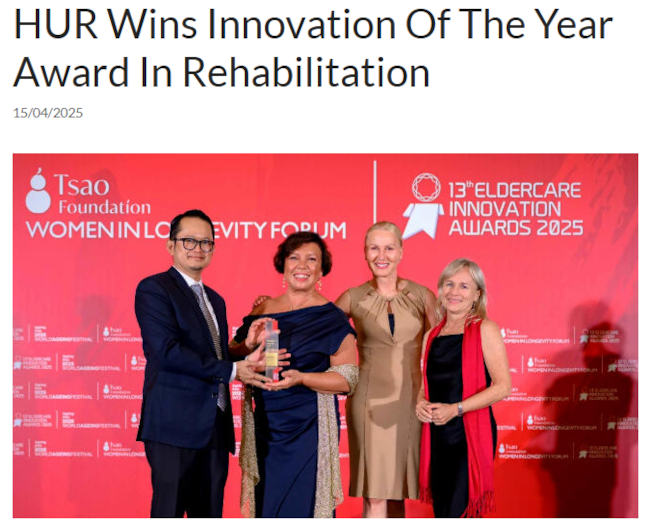
In April it was time to celebrate! I joined HUR’s Finland and Singapore teams and the Ageing Asia festival. Thie event, this year themed “Age of Longevity: Living Healthier Living Happier”, is always a favourite as it is always an event that gathers the best people to discuss innovation, policy, and care, providing many sessions that encourage global knowledge exchange, cross-industry collaborations, and sector partnerships to accelerate new projects and innovations that can support health, independence, and purpose.
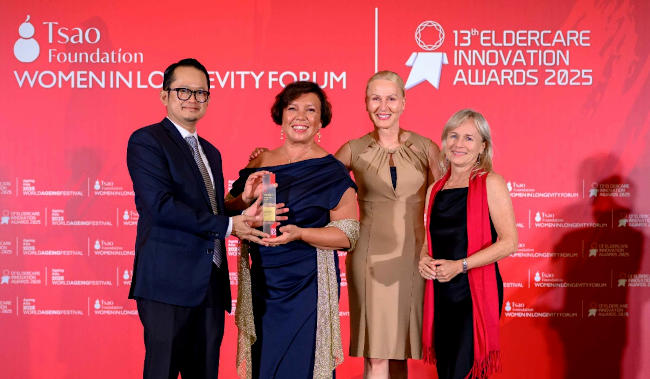
The event started with the presentations for the 13th Asia Pacific Eldercare Innovation Awards. This year I was presenting HUR’s new mobile application, our solution that allows you to combine all gym and home based exercise in one, allowing for the monitoring of total exercise, as well as the easy access to all users on their own data. The presentation of our product, “HUR mobile app – Your Complete Strength & Wellness Solution” was awarded the winner in the Physical Training and Innovation category at the Eldercare awards Gala held on the last night of the event. We are so proud to be part of a company that continuously thrives for improvement, using the advancements in technology to create functional solutions that respond to the demand.
You can find my full blog about the event here.
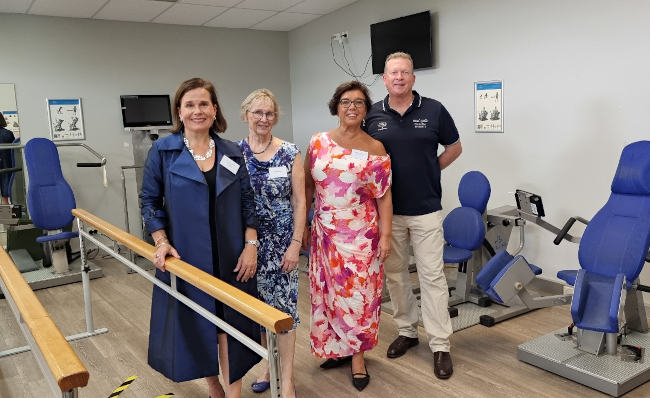
In April we also had the opportunity to celebrate with one of our oldest clients, Finncare. Originally called Finlandia Village, Finncare was established in 1975 as a ‘home away from home’ for older Finnish people in Thornlands, Queensland.
At the 50th Anniversary celebrations we visited Finngym, one of the first installations for HUR Australia, opened to residents even before the company officially existed. It was wonderful to showcase the gym to the current President of the board, Katriina Tähkä, as well as the local councillor Paul Gollé, and Varpu Pesonen, who was the nurse manager when the original gym was installed nearly 20 years ago. Varpu told about the vision of then CEO Ruth Baxter, who together with HUR Australia’s founding manager Ari Kallinen, made the gym happen.
Since the opening of the gym, residents have been actively supported to exercise, and many of the staff members were discussing the great health benefits the residents have gained. Finncare is a great example of a site that truly appreciated the active ageing culture.
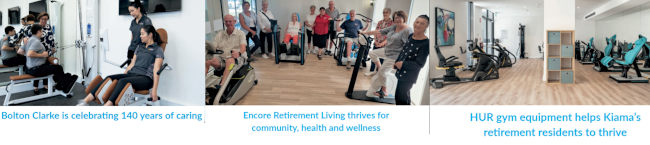
In May we published our Newsletter 2025 vol 1, themed around Positive Ageing. It is always great to share the stories from our clients. Our cover story celebrates 140 years of Bolton Clarke, a service that started with a single nurse and today is Australia’s largest independent not‐for‐profit provider, with a team of 16,000+ supporting 130,000 Australians.
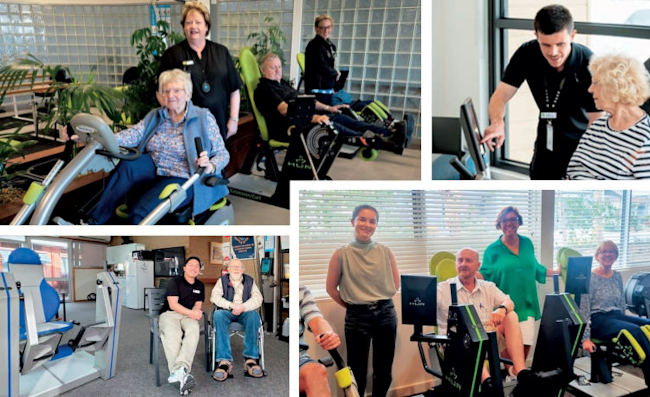
We are very happy to be part of their services at multiple sites, providing accessible equipment, allowing everyone to reach their best health, also including those who have been through medical issues. The ability to access rehabilitation in a retirement living facility maximises the success for everyone’s health.
All the client stories describe the benefit and joy that the exercise spaces have brought to their residents, with the benefits also mentioned by family members. It is always wonderful to hear about the positive impact that the inclusion of exercise has had! You can access this Newsletter here.
We have started preparing for next year’s first editions, please let me know if you have a story to share!
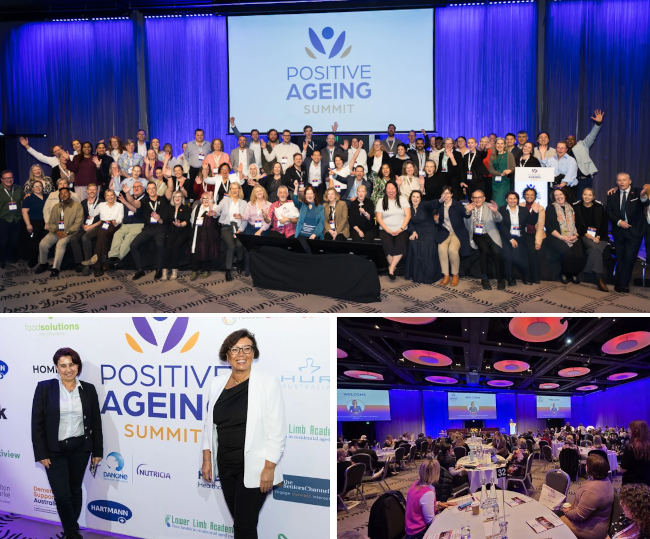
In May the conference season continued – first we travelled to Hobart for the Exercise and Sports Science conference, followed by the Positive Ageing Summit to be held in Adelaide. This inaugural conference was much awaited by many as one of the key components of the summit was to highlight allied health, uniting clinicians, caregivers, policy makers, and service providers in a shared mission: transforming aged care through evidence-based innovation.
The event truly delivered its promise – from the moment of entering the conference everyone knew that they were surrounded by like-minded people, people who believe that positivity matters, who believe that everyone deserves to age well! The Positive Ageing Summit was a true success, and the organisers delivered what they set out to do; the summit was filled with conversation on the best ways to age, from our fifties to the end of life.
The speaker line up was brilliant and consisted of managers, clinicians, researchers, consumers, community advocates with one thing in common – positive mindset and passion for the best practice that leads to the highest quality of life! The wide range of topics discussed was carefully selected, allowing the conversation to include even the toughest topics, such as dying, in a positive, caring manner.
You can read more about the summit here.
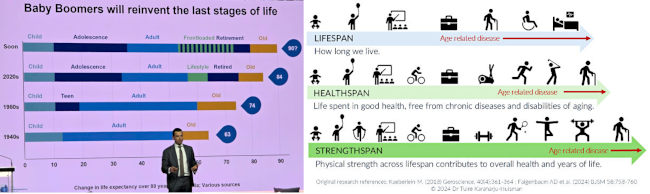
June was all about retirement with the National Retirement Living Summit held in Brisbane. The tone was set at the first keynote by Demographer Simon Kuestenmacher discussing the change in ageing. Whilst in the 1940s our lifespan was divided in three clear parts – child, adult and old – with the average lifespan lasting 63 years, we now live to an average of 84 years, and our lifespan consists of sections of child, adolescent, adult, lifestyle, retired and old, emphasizing active living whilst minimising years spent with illness. This all was summarised with a statement in his other slide – by 2035 Australia will be bigger, more youthful, and older.
This statement reflects a topic that we often talk about – healthspan. Ageing well reflects the choices we take. Whilst lifespan is purely the years we are alive, healthspan responds to the vision that Simon described in his presentation – Life spent in good health, free from chronic diseases and disabilities of ageing. By living well, including good nutrition, appropriate exercise and social connections, we can minimise the risk of illness and live a longer life with health and wellness, reflected in our quality of life.
Daniel Gannon, Executive Director – Retirement Living Council summarise the industry: Retirement living villages are not just places to live — they’re delivering real health and wellbeing outcomes:
- Residents are 41% happier
- 15% more physically active
- Twice as likely to catch up with family and friends
- Five times more socially engaged
We are so happy to be part of the retirement and 50+ industry and excited about the opportunity to provide everyone a path to ageing well. Healthspan is in the centre of action and part of the path to best ageing, the way we want to do it! You can read the full report via this link.
After a winter break the conferences continued. 2300 people gathered at the Ageing Australia National conference that was held in Gold Coast. The theme, “Meeting the Moment. Shaping the Future”, reflected the many challenges Aged Care is facing– a once-in-a-generation reform to start in November, the growing expectations towards the change, and a required commitment to supporting older Australians through every stage of ageing.
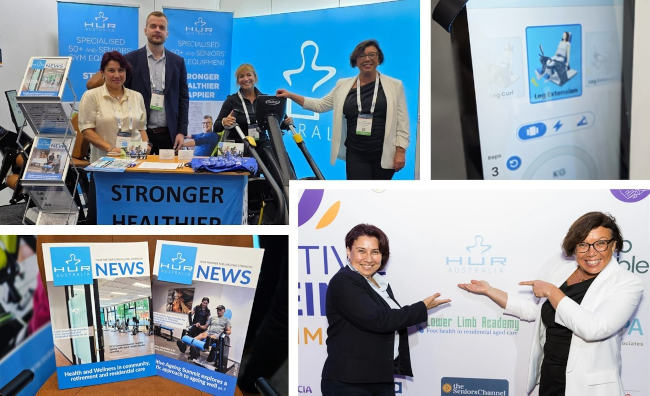
At the HUR Australia booth, we enjoyed catching up with many old friends. It was great to hear so many wonderful stories of success from our clients, especially hearing about many individual stories where our gyms have been part of improving not just the health and wellness of all users, but also the quality of life of the residents.
Some stories were beyond our wildest dreams, including retirement villages where more than 90 % of residents use the gym, or residential care sites where all residents are ambulant after engaging in a gym program.
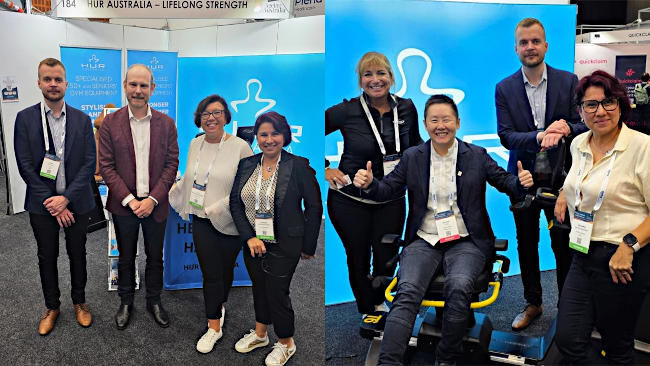
Our purpose and passion are to find the best exercise solutions for every site, and it is wonderful that our services, based on evidence-based recommendations and clinically-proven models truly work. We are grateful for every partnership that we have created and are thrilled of all collaborations in providing the best health to everyone. You can revisit the full blog via this link.
This year we published two editions of our Newsletter, with vol 2 published in time for the Ageing Australia conference. By dividing the articles into two publications, we have an opportunity to not just share stories from our clients, but also to share stories from special occasions, education and product developments.
The second edition included client stories from all areas of aged care – community health, retirement, and residential aged care, every story highlighting the importance of exercise to ageing well. We are grateful to all our clients – ACH Group (SA), Eventide Homes (Vic), Benetas Dalkeith Heights (Vic), and Queen Victoria Care (Tas) for sharing their stories! You can access this newsletter here.
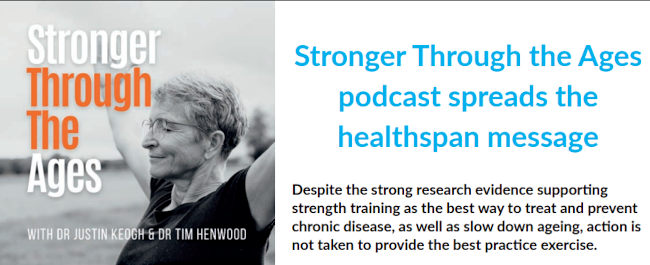
We were also happy to introduce all our readers to a new podcast, “Stronger Through the Ages”. In this podcast two of our favourite Exercise Physiologists with a serious passion for Strength Training, Dr Justin Keogh and Dr Tim Henwood, sit down to discuss science, stories, and strategies behind helping older adults stay strong, independent, and thriving. The purpose of the podcast is to spread the knowledge and clinical experiences on the many benefits of exercise for older adults, and especially the importance of weight‐bearing and resistance training.
Since May 14 episodes have been aired, with the next one to air next week. From the introduction to the podcast, discussing how Exercise therapy is the only way to push back dwindle, decline in later life, the discussions have covered the importance of muscle mass, maintaining independence, living longer and better, and many more, really focusing on many key aspects of the issues that sometimes hinder us from exercising. You can find the podcast here.
Our last conference for the year was the National Physiotherapy exhibition in Adelaide. With a wide range of topics there was something for everyone. With 12 clinical streams, and more than 400 presentations, the topics covered eg. behaviour change, complex and chronic conditions, diversity equity and inclusion, Aboriginal and Torres Strait Islander health, physical activity, rural and regional health as well as technology and clinical innovation. We had so many great chats at our HUR Australia booth – old friends and new connections; so many great stories and many plans for the future!
Throughout the days it was clear that we are well known for Active ageing, falls prevention and reablement, but little known to many we also offer an advantage in sport and rehabilitation. Indeed, the equipment was initially developed 37 years ago for explosive power training for athletes. Very soon it became obvious that the winning edge of the technology was extremely suitable for rehabilitation.
With the testing and training solutions we can offer something special for everyone, as verified by some recent articles, including this video from the Finnish Ice Hockey team Tappara. This video also includes a visit to the HUR factory in Kokkola, Finland.
It has been a great year of knowledge, connection and storytelling. We have seen the excitement on the users faces and have heard the stories about the benefits of exercise. We have been part of so many projects that will change so many lives to the better! Research has been ongoing, emphasising the impact that strength training has for health at all ages. The knowledge is spreading, even if we still have a long way ahead to strengthen the role that exercise has in public health.
Good health belongs to everyone, and the inclusion of exercise is a key component of a healthy life leading to not just more years in our lifespan, longevity, but to years in good health, allowing us to lead the life we imagined, extending our “Healthspan”.
Our motto is – Stronger, Healthier, Happier.
Our purpose is to provide services that allow everyone to keep up their best health. In September I teamed up with DCM media to create an elevator pitch that gives a quick snippet to our services.
What will next year bring? For that we will need to wait and see!
If you have a story to share, please let me know! I’m already planning our next year’s Newsletters and would love to hear from you!
Best wishes,
Dr Tuire Karaharju-Huisman
Physiotherapist, Accredited Exercise Physiologist (ESSAM), PhD (Biomechanics)
Research Lead, Area Account Manager (Vic, Tas, SA, NT, WA, ACT)
