
Happy New Year 2026!
In the first blog of the year, I always want to set the theme for year. This year’s topic was an easy one as it reflects some great articles that were published at the end of last year and in January 2026. This year – let us talk about “Muscles – From Physiology to Function.”
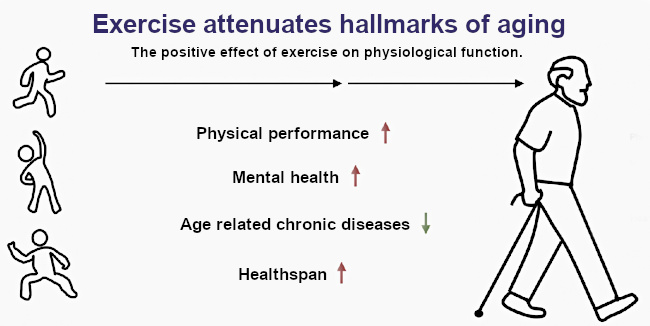
It is wonderful to live in an era where researchers from different areas collaborate allowing for multidisciplinary conversation, also publishing their findings in graphical formats, making it easier to share even difficult topics in an understandable form. The knowledge on the benefits of exercise is constantly growing and providing a new level of knowledge reflecting the benefits from cellular level to function and quality of life.
When talking about strength training people often focus only on building muscles for the sake of building muscles, or to lose weight. Thankfully this mindset is changing as seen in the texts I mention below. These days we are more spreading the word on the many health benefits strength training provides, hoping that the conversation will reach a winder audience, including all allied health staff and medical practitioners, not just those who already have the knowledge.
A great paper by Qiu et al., titled “Exercise attenuates the hallmarks of aging: Novel perspectives” was published in early December, nicely summarising the many physiological changes that impact the ageing process, as summarise below in the graphical abstract (J Sport Health Sci 2025 Dec 4:101108.)
This article provides a great summary on the many physiological impacts that exercise has in the cellular level, leading to the functional and health improvements. Without exercise as intervention, the expected and acknowledged increased life expectancy of the future generations will be accompanied by a decline in functional capacity, together with an increased risk of age-related diseases, correlating to reduced quality of life.
For quite some time we have been discussing healthspan, and the impact of exercise. This article provides a great summary, and a detailed list from the effect on cellular level, of the research evidence that is behind this statement; exercise favourably modulates all 14 hallmarks of aging (fig 2), providing further support for using exercise as a non-pharmacologic intervention to promote healthy aging and to delay or prevent the onset of age-related diseases.
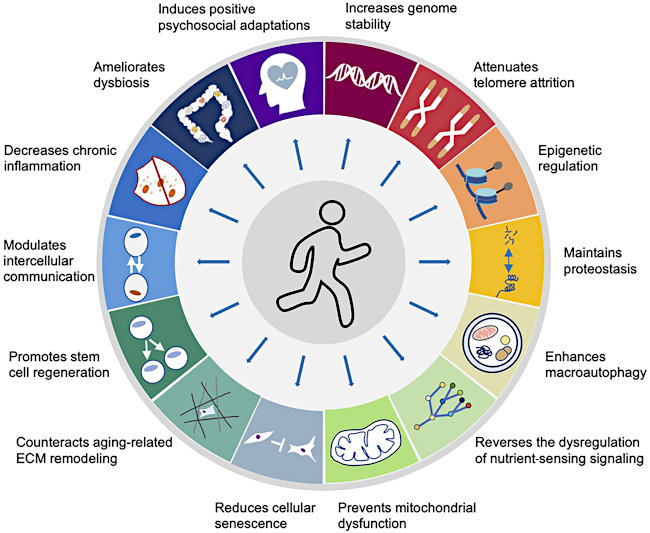
Figure 2. “Exercise attenuates the hallmarks of aging” – The main regulatory mechanisms by which exercise delays aging. Qiu et al (2025).
As the authors state: “Regular physical exercise is strongly associated with numerous health benefits and is recognized as a key strategy for promoting healthy aging and extending healthspan”, and summarise some of the findings as follows:
- Exercise is closely associated with a wide range of positive health-related outcomes in older adults.
- Engaging in regular moderate-intensity physical activity mitigates multiple hallmarks of biological aging.
- Exercise represents a promising non-pharmacological strategy to promote healthy aging and prevent the onset of age-related diseases in the elderly population.
- Reducing sedentary behavior and increasing participation in regular physical activity should be universally encouraged across all age groups.
- To maximize the benefits of exercise, further research is warranted to define the effective minimum and safe maximum thresholds of exercise in older adults.
In September 2025 Izquierdo, Ramirez-Velez and Fiatarone Singh published a great paper adding to the message of their brilliant literature review in January 2025, that provided the best exercise guidelines for healthy longevity. The new article, Integrating exercise and medication management in geriatric care, discusses the urgent need for a comprehensive assessment of lifestyle, diagnoses, geriatric syndromes, and medications with an emphasis on fully incorporating exercise treatment into geriatric care. With the evidence of the effect of exercise to many conditions where medication can have a vast list of side-effects, and often a poor effect on the actual disease, including depression, anxiety, insomnia, osteoarthritis, and dementia.
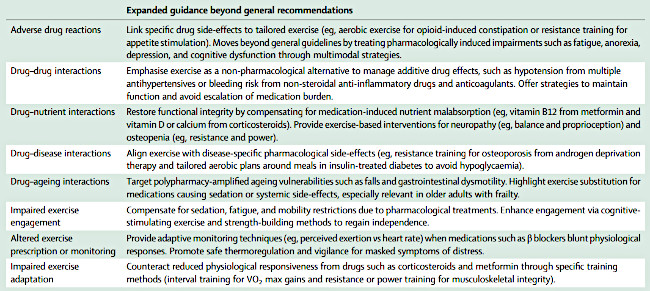
Table 1. Integrated management of exercise and pharmacotherapy interventions in the care of older adults. (Izquierdo et al. The lancet, Healthy Longevity, Volume 6, Issue 9 100763 September 2025)
This opinion piece published in the Lancet is written by the global top specialists who have been for years researching the key areas and providing direct guidelines for the best exercise to avoid disease, age well with the best health whilst expanding our healthspan. This new piece provides a model where exercise is integrated with pharmacotherapy interventions (table 1). As stated by the authors:
“Exercise is an important adjunct to pharmacotherapy for many common chronic conditions such as coronary artery disease, heart failure, diabetes, osteoporosis, cancer, and chronic obstructive pulmonary disease. Adding exercise to drug management can mitigate adverse drug reactions, enhance medication compliance, and reduce the adverse effects of sedentary behaviour and ageing processes on chronic disease expression.”
This month the Journal of Physiology published an article by Lecce et al, “Resistance training-induced adaptations in the neuromuscular system: Physiological mechanisms and implications for human performance” relating the cellular level adaptation straight to strength training.
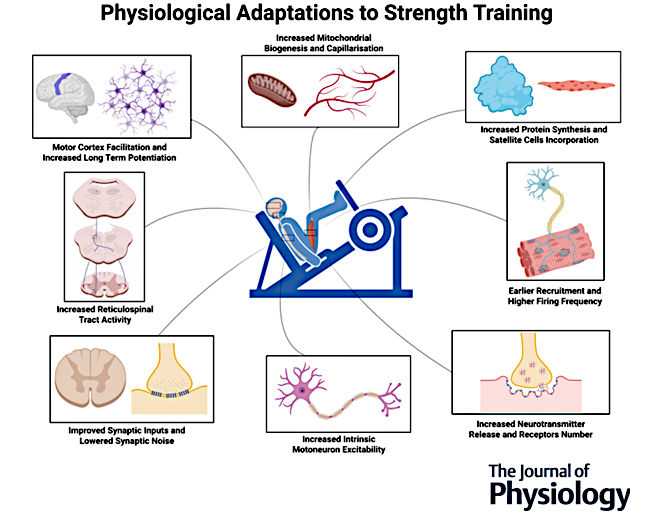
Figure 3. Physiological Adaptations to Strength Training. Lecce et al. J Physiol604.1(2026)pp81–115
The abstract figure (above) presents how resistance training-induced adaptations involve multiple physiological pathways across the whole neuromuscular system, resulting in the changes in the skeletal muscle. The review article presents the details of the effects of strength training in different levels, discussing their necessary collaboration, leading into adaptations in tissue level, leading to implication for human performance.
The deep understanding of the impact of exercise allows us to not just understand the function and its impact but also improve clinical understanding as the base for details exercise prescriptions to optimise health, function and independence across the lifespan.
In the beginning of the year Professor Stuart Phillips, Professor in Kinesiology and an Adjunct Professor in the School of Medicine at McMaster University, published a goal-setting blog and summary image for 2026.
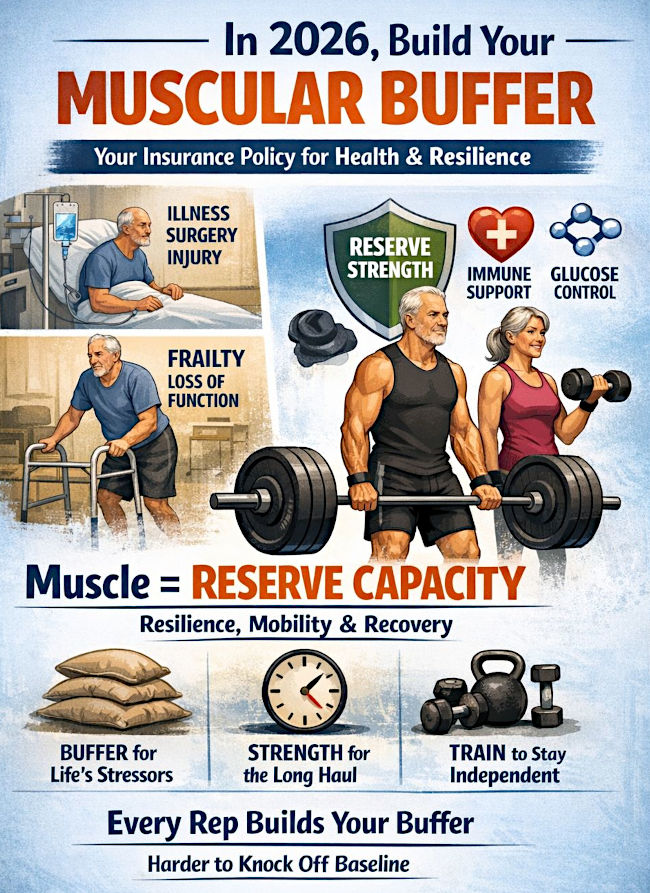
Figure 4, Build your muscular buffer (Stuart Phillips, 2026)
In his text Professor Phillips explains the basics of muscle physiology in keeping up health, eloquently summarising the health literacy on the benefits of strength training, describing why it is important to build our “buffer” – our own internal insurance policy and functional reserve for health and resilience, allowing us to overcome adverse events.
“Here’s the bottom line: muscle is insurance, not vanity. You don’t train it to look a certain way or chase lifetime PRs; you train it so that everyday stressors don’t knock you off your feet. A few short, repeatable sessions each week quietly compound into years of independence, resilience, and optionality.”
A few weeks earlier another wonderful summary infographic was published by Dr Moien Khan, Associate Professor at Department of Family Medicine, United Arab Emirates University, describing the relationship between muscular activity and cellular ageing.
In his post and informative poster, Dr Khan discusses the impact of muscle loss of cellular level, with the consequence impact of health and function. Indeed, the negative circle that starts with physical inactivity, consists of multiple steps:
Physical inactivity, low protein intake, chronic inflammation, hormonal decline, and insulin resistance reduce muscle mass, affecting cellular regulation and leading to eg. Impaired insulin signalling, reduced glucose uptake and mitochondrial dysfunction. Over the time the cellular dysregulation manifests in eg hormonal imbalance, immune dysfunction, cognitive decline, frailty and metabolic disease. Muscle loss translates directly into accelerated biological ageing.
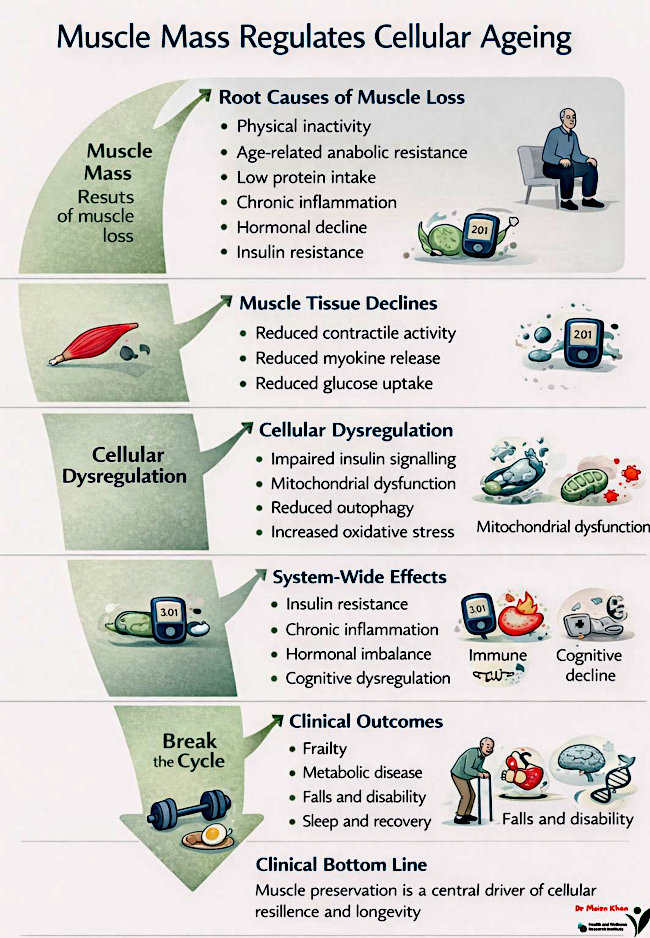
Figure 5, Muscle Mass Regulate Cellular Ageing (Dr. Moien Khan, 2025)
As summarised by Dr Khan: “Preserving muscle preserves physiological reserve. It reduces vulnerability to disease and slows the biology of ageing. Muscle is not about appearance or strength alone. It is one of the most powerful longevity tools we have. If you care about ageing well, start treating muscle as cellular medicine.”
The evidence is there, from Physiology to Function, yet the message is getting lost. However, this clear messaging from many groups around the world hopefully helps every practitioner in spreading the message, improving the health literacy of health care staff, and aids in transferring the knowledge to all. Only by sharing the knowledge we can hope to make a change. Let us keep up this conversation and mission for active ageing and reablement going, stronger than ever, and spread the health literacy.
One easy access path to knowledge is the Stronger Through the Ages podcast, hosted by Dr Justin Keogh and Dr Tim Henwood, both known advocates for strength training in mitigating chronic diseases. The purpose of this podcast, that has been running since May 2025, is to spread the knowledge and clinical experiences on the many benefits of exercise for older adults, and especially the importance of weight‐bearing and resistance training.
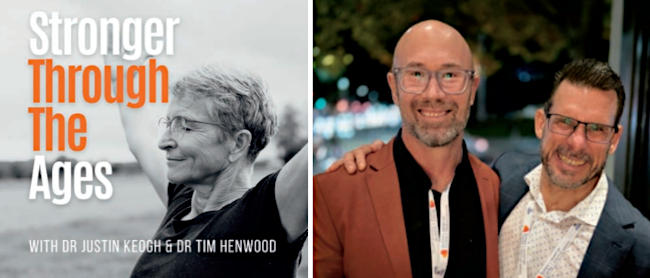
The hosts discuss the topics, but also invite guests to share their clinical knowledge and experience. The recent episodes have covered topics, such as Cardiovascular health, dementia and residential aged care, with viewing points to the topic from academia, management and allied health. You can also read about eth podcast in our last year’s Newsletter vol 2.
Positive Ageing Summit, Adelaide
Another great way to hear from the best is attending a conference. One of the highlights of 2025, for the discussion on allied health, was the inaugural Positive Ageing Summit. This year the conference returns to Adelaide on May 20 – 21. The program is coming to together with excellent speakers as key notes and panelists.
I am super excited about the main keynote speaker on the first day, a person I have mention earlier and in many other blog posts. Professor Maria Fiatarone Singh is a geriatrician whose research, clinical, and teaching career has focused on the integration of medicine, exercise physiology, and nutrition as a means to improve health status and quality of life across the lifespan. She has led many research projects over the last 40 years, with a focus on prevention and treatment of sarcopenia and its clinical sequelae in older adults, in particular both physical and cognitive frailty, with anabolic exercise-high intensity progressive resistance training (PRT)- and other lifestyle interventions.
This will be a great year – Just in the last weeks I have visited people in new sites and I look very much forward to sharing their stories, and many more other discussions!
Best wishes,
Dr Tuire Karaharju-Huisman
Physiotherapist, Accredited Exercise Physiologist (ESSAM), PhD (Biomechanics)
Research Lead, Area Account Manager (Vic, Tas, SA, NT, WA, ACT)
[Main image: Adapted from Graphical abstract for “Exercise attenuates the hallmarks of aging: Novel perspectives”, Qiu et al 2025.]
