
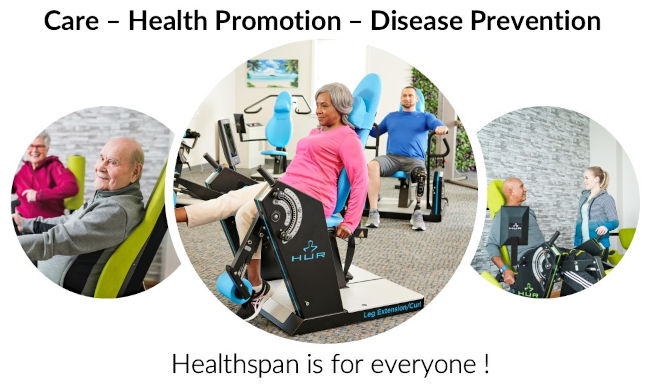
Traditionally we divide the ageing industry in categories – Community and home care, retirement living and aged care.
However, in the last years these areas have been merged in our conversations – during the last two years, the National Ageing Australia conference has had a special category focused purely on retirement living, and recently the events typically dedicated for discussion on retirement living are inviting speakers to discuss aged care.
A great example of this is last week’s Leaders Summit, where concurrent sessions were held for both industries and guest speakers included both the CEO of Ageing Australia Tom Symondson, and the Executive Director, Retirement Living Council, Daniel Gannon.
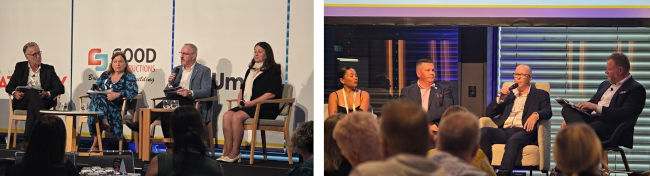
On the left – Residential living panel (from left to right David Tattam, Lorraine Poulos, Peter Williams, Sylvia Hadjiantoniou); On the right – Retirement Living Panel (from left to right Chona Navarro, Mark Eagleston, Laurie Boxwell, James
As we separate the industries we differentiate the services. But what are the support services that belong to everyone – who deserves care, but also reablement, health promotion and disease prevention?
Daniel Gannon’s speech at Leaders Summit was titled “Care as infrastructure – independence as outcome”. It was a great presentation discussing who care belongs to – how do we see care and those that need care?
We often think that more care automatically means less independence – “you’re either “independent” or you’re “in care”. That if care is present, independence must, by definition, recede.”
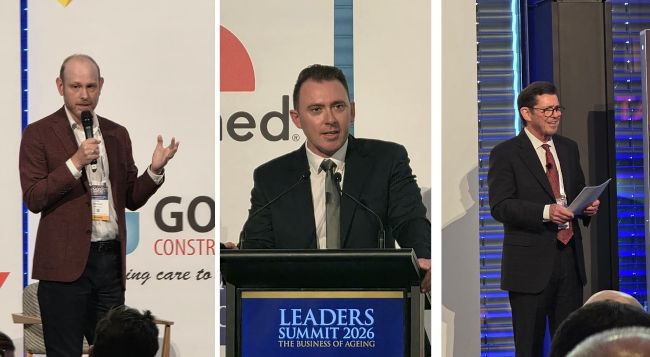
From left to right – Tom Symondson, CEO Ageing Australia; Daniel Gannon, Executive Director, Retirement Living Council; Chris Baynes, CEO, DCM Group.
What if we offered care earlier, and supported people in keeping up their health? This is where allied health matters the most. Allied health professionals are defined as “University-qualified practitioners—excluding doctors, nurses, and dentists—who provide specialized, evidence-based care to prevent, diagnose, and treat illnesses.
Their purpose is to improve patient function, independence, and overall wellbeing through therapeutic and diagnostic interventions, working in partnership with GPs”. Indeed, last year’s aged care reform had a focus on the Support at Home program, designed to help people to retain their independence and remain in their homes as they age, with an investment of $5.6 billion in a reform package with three items or funding: ‘clinical care’ ,‘independence’ and ‘everyday living’, specifically mentioning allied health services.
Care should start before it is desperately needed. As said by Daniel: “Care isn’t the opposite of independence. For a lot of operators, it’s a proud part of the promise – and a real strength. Strategically, the goal is simple: care should enable independence, not replace it.”
“When people feel supported, connected, and not alone in managing everyday life, they don’t withdraw. They grow in confidence.”
You can find Daniel’s full speech via this link.
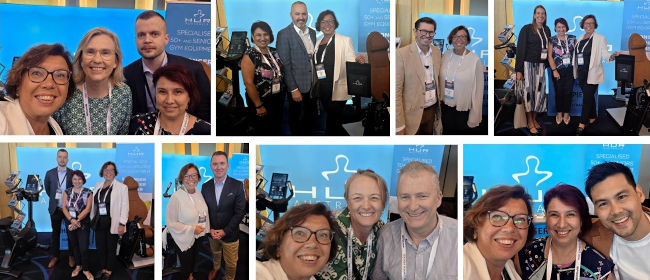
So many catchups at the Leaders Summit.
Whilst it is important to talk about funding and policies, it is good to every now and then stop and think about the basics. At the core of these conversations are some key topics that we have discussed often over the last few years.
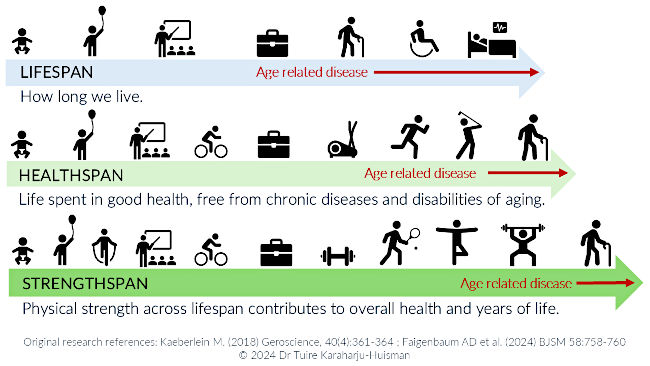
Healthspan – “The period of life spent in good health, free from the chronic diseases and disabilities of aging” (Kaeberlein, 2018, GeroSciece).
Whilst Lifespan is purely the time we are alive, Longevity discusses the ways we can live longer. Healthspan however is about living better, doing the things we like to do, living a life with high quality. By including exercise in our lives we don’t just live longer, but can minimise the years spent with disease.
You can read my full blog via this link.
Reablement – Reablement emphasises assisting people to regain functional capacity and improve independence. It is defined as goal-oriented support designed to help people regain physical, mental, or emotional confidence and skills, and enabling them to live independently at home after illness, injury, or a hospital stay. Rather than just providing care, it focuses on doing tasks with a person, not for them.
Reablement is often offered together with wellness, defined by the Commonwealth Home Support Programme (CHSP) Good Practice Guide as “Wellness emphasises identifying needs, aspirations and goals. It acknowledges and builds on strengths and has a focus on integrating support services as a path to greater independence and quality of life.”
We should not classify people who require care, rather we should offer care, health promotion and information on disease prevention to everyone. It is never too early or late, healthspan should be the right to everyone.
You can read my old blogs and articles via this link about reablement and this blog with a residential care focus via this link.
Our conference year has been started and I’m already excited about our next major event, the Positive Ageing Summit to be held in Adelaide on May 20-21, with site visit tours to be held on Friday May 23.
Last year’s inaugural summit was the highlight of 2025 putting allied health services and reablement at the centre. The gathering of clinicians, researchers, government officials and policy makers allowed for conversations that truly provided the best working models!
The organisers have made this year’s program even better bringing a program filled with impactful sessions, leading experts, and practical workshops that will provide evidence-based strategies for independence modifying and high-quality, person-centred care.
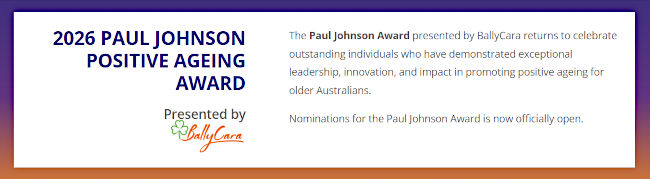
The event also wants to celebrate outstanding individuals in the aged care sector with demonstrated exceptional leadership, innovation, and impact in promoting positive ageing for older Australians. The award, supported by Bally Cara, and named in memory of Paul Johnson OAM, a visionary leader whose dedication to reablement, health, and wellness transformed aged care, wants to recognise those who, like Paul, are committed to ensuring that age is never a barrier to living well.
Do you know someone who is deserving of this award? Applications are now open, you can apply here.
What a great start for the year – we can’t wait to discuss more healthspan with you very soon!
Best Wishes,
Dr Tuire Karaharju-Huisman
Physiotherapist, Accredited Exercise Physiologist (ESSAM), PhD (Biomechanics)
Research Lead, Area Account Manager (Vic, Tas, SA, ACT, WA, NT)
