
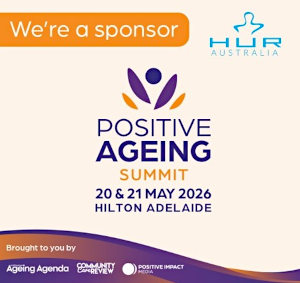
We are so happy to be a silver sponsor at the Positive Ageing Summit returning to Hilton Adelaide next week, on May 20 & 21, with two site visit tours also scheduled for Friday the 23rd!
With a fantastic program and a great line-up of speakers, this conference caters for every person in the aged care industry. You can still sign up for this great conference, with the registration link and more information at the official site here.
If you want to revisit the learnings from last year’s conference, we suggest listening to the “Stronger Through the Ages” podcast by Dr Tim Henwodd and Dr Justin Keogh, both advocates for reablement and experienced researchers, educators, clinicians and strength training enthusiasts. In this episode, the hosts discuss the many learnings of the conference.
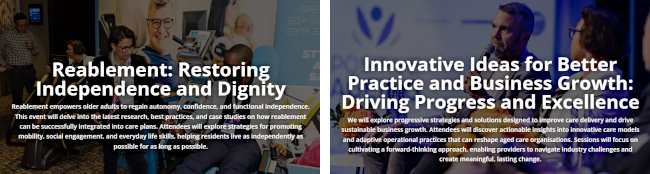
 This year’s program continues from where we left last year. Whilst allied health and reablement are still at centre, this year the program expands to cover medications, technology and innovation as well as behavioural science, leaning into areas that are shaping the future of ageing well. The program also includes three masterclasses, with expert leaders.
The conference also celebrates outstanding individuals who have demonstrated exceptional leadership, innovation, and impact in promoting positive ageing for older Australians. The Paul Johnson Award presented by BallyCara on day one of the event, with the finalists announced last night.
Aged care provider executives Karn Nelson, Liam Mayo and Tanya Davison have reached the finals of the 2026 Paul Johnson Positive Ageing Award for their innovative, scalable and sustainable approaches to supporting older people’s wellbeing. We want to congratulate them all, and celebrate everyone who applied for the award.
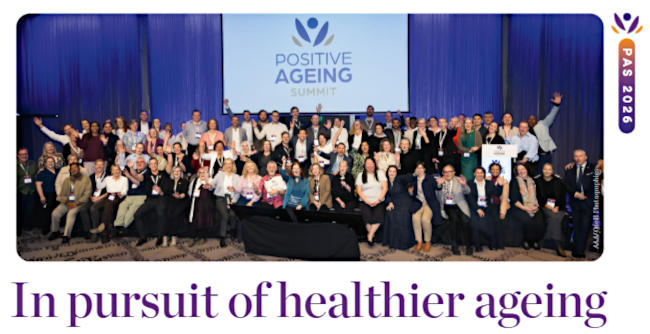
The autumn issue of the Australian Ageing Agenda published a few weeks ago included the 14-page special edition on the Summit.
One of the new topics of the summit is technology. The special edition discusses practical realities, research, innovation and possibilities data brings. Today’s technology allows us to monitor daily activities, gait function, transfer times, sleep patterns and many more, creating an opportunity for an early detection of change, and thus a chance for an earlier intervention, and consequently the opportunity to avoid functional decline.
Technology can be a powerful asset in supporting positive ageing; helping people in expand their healthspan, living with grater capability, confidence and dignity. Furthermore, the use of digital support and innovative reablement approaches, help can be provided faster, supporting a more proactive care delivery. Technology can offer an easily accessible meaningful connection for older people, their families and frontline staff. Technology will never replace human interaction and care, but it can help to deliver better care.
When discussing big data and the benefits in positive ageing and reablement, many topics can be considered, such as personalised medicine, predictive analytics and models including prevention of falls and the progression of chronic diseases. Data analysis is a powerful tool to improve care and coordination, operational efficiencies and the analytics that reveal trends across a group.
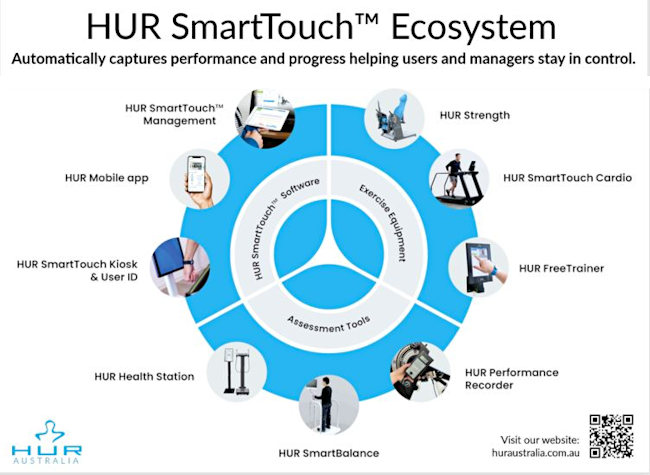
For us at HUR data analytics allow us to transform every training session into an intelligent, interconnected, and fully integrated computerized exercise system that supports the three tiers in training: the user, the trainer and the operator, using an ecosystem that includes multiple exercise modalities.
Another new aspect is the discussion if social aspects and meaningful engagement; how can we functionally merge health, wellness and social connection? Indeed, social connection is a form of preventative health, rather than a secondary aspect of care. Appropriate program designs successfully merges and delivers individual meaning, behavioural science, social engagement and physical wellbeing. People who are who feel included and connected are more likely to take part in activities that promote health and wellbeing. Social connections are vital to maintain quality of life.
There is a strong connection between social, spiritual and behavioural aspects – whether we talk about quality of life, or health behaviour change. With this knowledge, successful strategies can be implemented to support all people in the ageing ecosystem, from the older people to workers and management

The masterclasses of the event bring best practices into actions. In the “Reablement at mealtimes: Practical approaches to improve safety, independence and nutritional intake” session, a Dietitian and Speech Pathologist will share practical, person-centred approaches helping people stay well-nourished and confident at mealtimes while maintaining choice and dignity.
The “Evidence to Impact: Building and Delivering Beneficial Strength and Balance Programs” is led by internationally recognised physiotherapist Dr Jennie Hewitt and Associate Professor Justin Keogh, who will share practical strategies for embedding progressive strength and balance training into your business model—whether you work with community-dwelling older adults or residents in aged care.
The “Innovation That Sticks: Implementing Practical and Evidence-based Change for Positive Ageing” masterclass focuses on how to move from evidence to impact—supporting positive ageing through practical innovation, effective change management and implementation that works in real-world settings drawing on ARIIA’s national work in workforce capability building, best-practice resources and pragmatic implementation know-how.
BallyCara executive chairman Marus Riley summarises the purpose and core of Positive Ageing nicely by stating:
“Positive ageing is about maximising opportunity, not managing decline. It’s the deliberate pursuit of our healthspan, purpose, connection and contribution at every stage of life. It recognises that ageing is not linear and involves three levels of responsibility – personal, community and societal – to support people to keep living meaningful, self-directed lives for as long as possible.”
We look forward to seeing many of you in Adelaide!
Best Wishes,
Dr Tuire Karaharju-Huisman
Physiotherapist, Accredited Exercise Physiologist (ESSAM), PhD (Biomechanics)
Research Lead, Area Account Manager (Vic, Tas, SA, ACT, WA, NT)
