
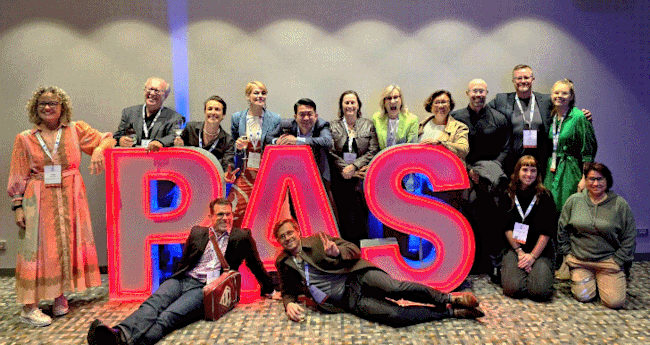
Positive Ageing Summit, organised by Australian Ageing Agenda (AAA) returned to Adelaide at the end of May and gathered clinicians, researchers, policy makers and management to discuss the pathways that support positive ageing to all.
As soon as the registration opened, the corridors filled up with participants filled with excitement, ready to hear from the presenters discussing the best-practice principles and directions to aim for, as well as catching up and connecting with all the like-minded people. Dorothy and I had a great time connecting with so many new and familiar faces.
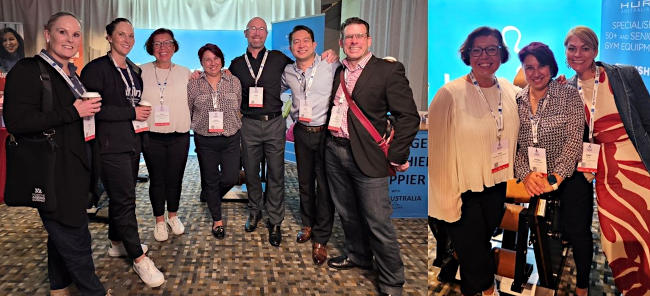
Pictured from left to right: Wini Health team Leigh Sherry and Natasha Lee, HUR Australia’s Tuire and Dorothy, Dr Justin Keogh from Bond University, AAA’s Mark Ryu, Age Fit principal Dr Tim Henwood and Dr Isabel King, Exercise and Sports Science Australia (SSA) policy advisor.
The program was filled with great speakers and discussion points. Whilst allied health and reablement were still at centre, this year the program also covered medications, technology and innovation as well as behavioural science, leaning into areas that shape the future of ageing well. You can find all Australian Ageing Agenda articles about the summit via this link.
The event started by a keynote presentation from Aged Care Research and Industry Innovation Australia (AARIA) program and research director Dr Rebecca Bilton, discussing the discrepancy between what the aged care sector knows to do and what can be implemented. The interactive talk asked the delegates to name the barriers they face in implementing change.
Majority of respondents, 47%, struggle with the lack of time and workload pressures, while 44% mentioned fatigue and too many competing initiatives. The audience surveys also showed that the best enablers for change are communication, collaboration and supportive leadership.
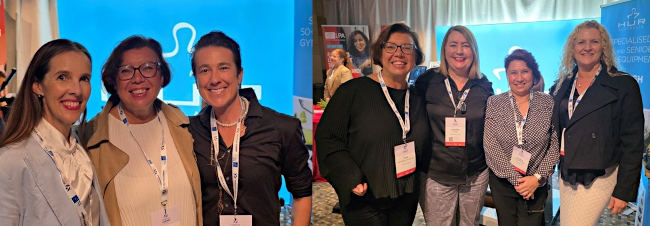
Pictured from left to right: Anita Hobson-Powell, previous Chief Allied Health Officer, BlueCare senior Exercise Physiologist Richelle Street, Jo Boylan, Director, Healthy Ageing In Action and Dr Jennie Hewitt, General Manager, Clinical Research & Reablement, Whiddon
In her talk, Anita Hobson-Powell, Australian Government Chief Allied Health Officer due to step down from the position after the conference, reminded everyone that reablement is at the centre, and allied health playing a key role as Australia’s population ages. “Allied health professionals are critical to maintaining function, preventing decline and supporting independence. Quite simply, allied health professionals enable people not only to live their lives longer but to live better” as stated in this AAA article.
The National Allied Health Workforce Strategy is progressing, with the Commonwealth Government working closely with the state and territory governments. The workforce strategy is divided into five priority areas:
- enhancing the impact of allied health professionals
- improving the national allied health workforce data to ensure understanding of how many allied health professionals there are, where they are located, and what sectors they are working in
- building a sustainable allied health workforce
- growing and retaining the Aboriginal and Torres Strait Islander allied health workforce
- increasing access to the presence of allied health services in regional, rural and remote communities.
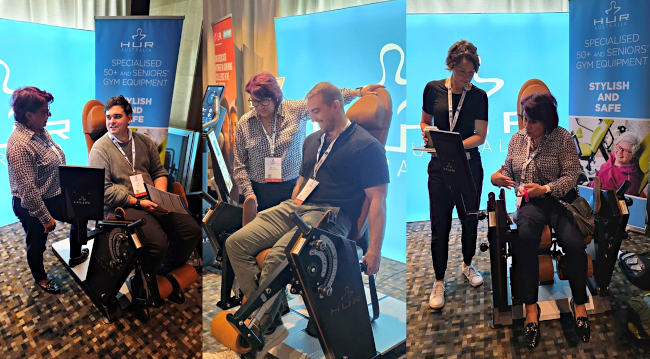
Pictured from left to right: Luke Maloney, Health Services team leader at ACH Group, Altaira Allied health Team Leader Luca, Police Home Health wellness leader Nadine Welke
The allied health – reablement – healthspan conversation continued in the finding your purpose panel. As stated by Plena manager Jason Skennerton: “Shifting the centre of gravity from reactive to preventative, reablement focusing wellness drives support. When that happens, something powerful changes. Aged care stops being about managing the client and starts being about sustaining life.”
AAA’s editor Natasha Eagan also interviewed senior accredited exercise physiologist Richelle Street about the successful strategies BlueCare is using to improve ageing.
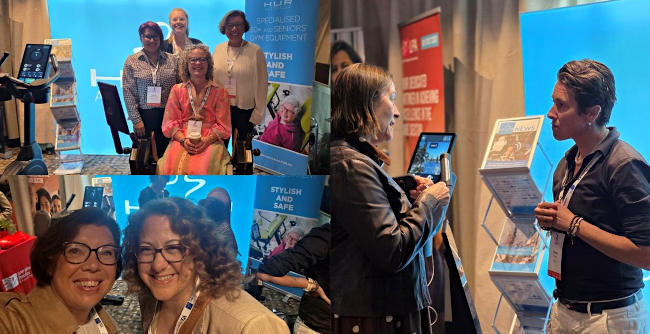
Pictured clockwise from bottom left:
Lidia Conci, CEO Solenne, Tamara Henwood, Kate Weger, Head of Clinical & Governance, Hartmann, Natasha Eagan AAA, BlueCare senior Exercise Physiologist Richelle Street
In her presentation Inspector-General of Aged Care Natalie Siegel-Brown said that Positive ageing is ‘smartest economic strategy we have’. In her talk she summarised what we have seen in the years of turmoil around the changes of the aged care act – “The new Aged Care Act codifies compassion, dignity and agency into law, but rather than looking at care from a positive ageing lens, the aged care system is stuck in a transactional approach that intervenes once frailty has already set in.”
She also supported the reablement pathway emphasizing that the “aged care budget should be used to prevent frailty, slow decline and support people to remain connected and independent, rather than used to provide the most expensive forms of care once people are already declining.”
“A system that supports independence rather than dependency, intervenes early rather than late and invests in connection rather than crisis will ultimately serve more people with shorter wait times, fewer emergency escalations and all of that lowers the cumulative cost of the system.” You can read more about her speech in this AAA article.
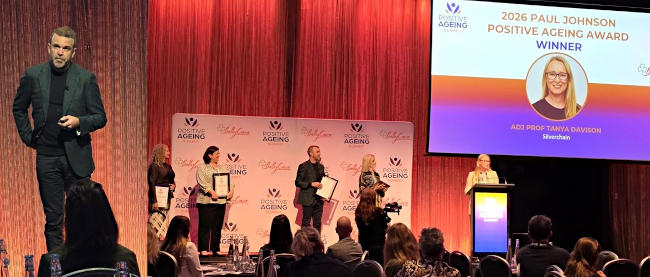
Before announcing the winner of the Paul Johnson award, supported by BallyCara, Marcus Riley Executive Chairman of BallyCara, gave his talk about Positive Ageing. He quoted Dr Becca R Levy by stating that “improvement in later life is not rare; its common and it should be included in our understanding of the ageing process”.
Marcus reminded us that our plans and actions should have a reablement and capability action based on the principle that positive ageing must be designed into daily life, not just added as a “lifestyle program”. Care models must have a practical shift that includes moving from
- Care plans to life plans
- Residents to participants
- Activities to activation
- Facilities to communities
- Compliance indicators to ageing intelligence
In the pre-conference edition of AAA, he stated this nicely by saying: “Positive ageing is about maximising opportunity, not managing decline. It’s the deliberate pursuit of our healthspan, purpose, connection and contribution at every stage of life. It recognises that ageing is not linear and involves three levels of responsibility – personal, community and societal – to support people to keep living meaningful, self-directed lives for as long as possible.”
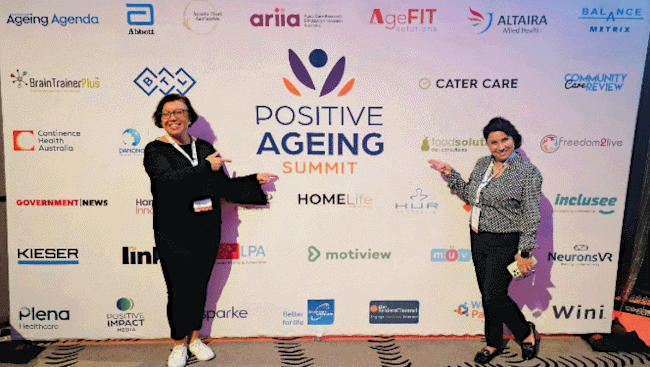
These are just some of the highlights from the conference, there is plenty more that I will discuss in future blogs. You can read more in the Australian Ageing Agenda articles, and listen to interviews about the summit via this link. You can also see a summary of the event via this video.
Dorothy and I had three great days in Adelaide and appreciate all the old and new connections whom we met. We love hearing how our clients are doing on their sites, and also are happy to help anyone who is starting their journey towards better health and wellness inclusion.
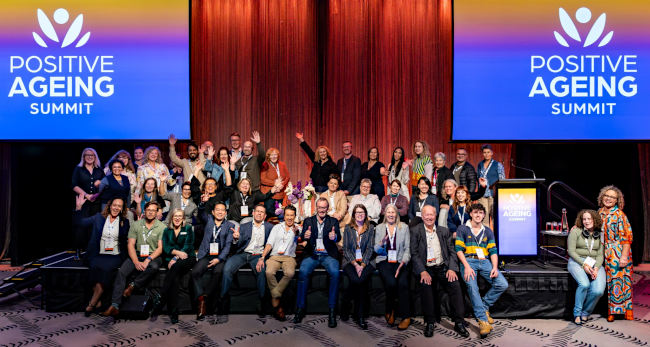
Photo Courtesy of AAA/Oneill Photographics
This conference truly is something special – the connection and the communal passion towards better care that supports every older Australian ageing in a meaningful, positive way.
Best Wishes,
Dr Tuire Karaharju-Huisman
Physiotherapist, Accredited Exercise Physiologist (ESSAM), PhD (Biomechanics)
Research Lead, Area Account Manager (Vic, Tas, SA, ACT, WA, NT)
