
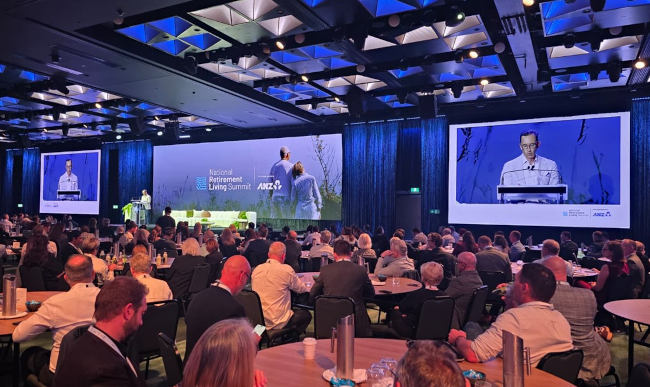
The National Retirement Living Summit hosted by Retirement Living Council and Property Council of Australia, was held on June 15-17 at The Star Brisbane, bringing together a lineup of speakers from across the globe to discuss housing models, integrated care, technology, design, care and wellbeing.
This years’ theme, “Navigating the changing landscape of the retirement industry” was discussed in keynote sessions, panel discussions and case studies to showcase innovative, consumer-driven services and the operators who run them, also including health and wellbeing for residents.
The event emcee Marcus Pearce is known for his longevity mission and passion – and as always, everyone was inspired with his enthusiasm and passion for the industry.
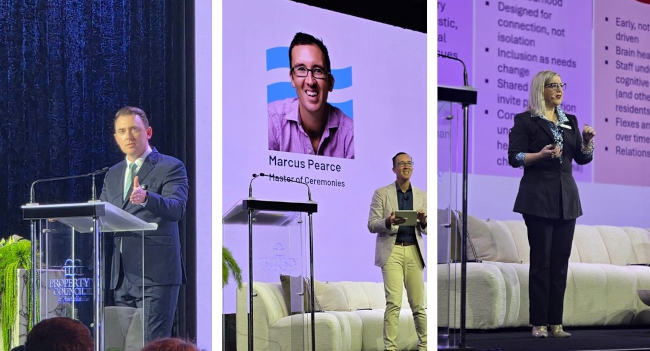
In his opening speech, the Executive Director of Retirement Living Council, Daniel Gannon, discussed the future of the industry and encouraged everyone to take the challenge with positivity by stating :
“Our job isn’t just to defend this sector. Our job is to define it.
If we get this right, we won’t just change retirement living.
Well change how Australia ages.”
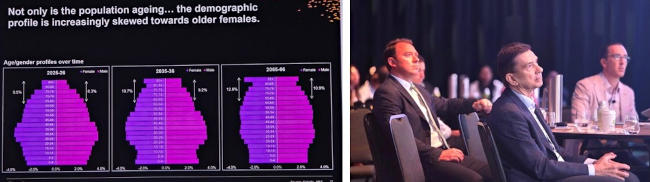
In his speech Tim Lawless refreshed everyone with the population statistics. The demographic projections indicate that one if five Australians will be aged 65+ by 2033. Currently ~ 18% of the population is aged 65+. Two decades ago, it was only 13%, but in 20 the portion will be 22%, and in 40yrs a quarter of the population is projected to be 65 and over.
Robin Lyons received the new Life Member Retirement Living Council award and talked about the “why” for him reflecting to “Believe” as shared by Ted Lasso. The industry must believe in better outcomes, futures and lives for older Australians. We need to get the planning right for those currently living in retirement living, but also future proofing right for designing, building and operating well in the future.
“Anyone can stand on the shoreline and complain about the tide. Leaders build the bridge that gets people across.”, “Believe”, “Sense of community, sense of belonging”, these are just some of the statements from day one.
Earlier in the year Executive Director of Retirement Living Council, Daniel Gannon, gave a speech titled “Care as infrastructure – independence as outcome”. It was a great presentation discussing who care belongs to – how do we see care and those that need care? We often think that more care automatically means less independence – “you’re either “independent” or you’re “in care”. That if care is present, independence must, by definition, recede.”
Care should start before it is desperately needed. As said by Daniel: “Care isn’t the opposite of independence. For a lot of operators, it’s a proud part of the promise – and a real strength. Strategically, the goal is simple: care should enable independence, not replace it.”
“When people feel supported, connected, and not alone in managing everyday life,
they don’t withdraw. They grow in confidence.”
This theme was strengthened when Marie Alford took to the stage to discuss dementia and the steps that retirement industry needs to take to support the residents with dementia. Dementia must be talked about and considered in the design and planning as the “discussion is no longer about if people in retirement will live with dementia, it is when and how we will respond, and how early we start designing for it.’
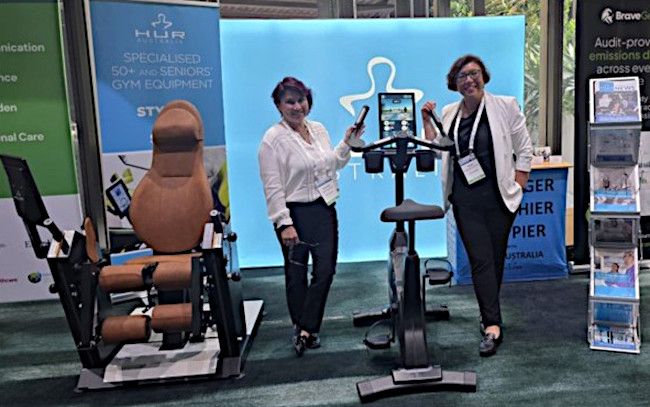
The facts are clear: 66% of people with dementia live in the community. Residential prevalence only overtakes community living at age 90+. 1.7 million Australians are involved in dementia care. In 2022-23 government dementia spend was AUS $4.7billion. We must include planning for dementia. As said by Dr Allen Power:
“Dementia is a shift in the way people experience the world around them”.
In our planning we should consider the person, the environment, the community and the support. A retirement village can offer familiarity, belonging, autonomity and control, as well as purpose and meaning.
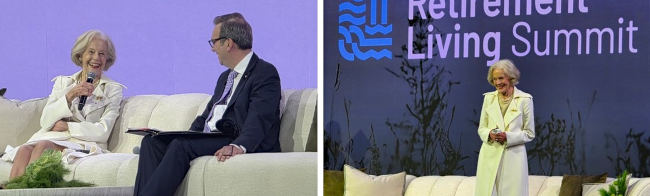
The program was filled with some many great experiences and visions, and also a conversation with the Honorary Dame Quentin Bryce, reflecting her life and the many learnings she has had, discussing equality, opportunity, rights and dignity and belonging.
The industry is changing. The conversations over the two days told so many stories and inspired everyone to do better. Retirement living is no longer just about housing. It’s about creating communities that help people maintain independence, connection, wellbeing and purpose as they age. As our population ages and demand continues to grow, the sector has an incredible opportunity to rethink how we support older Australians to live well for longer.
Earlier in June Colin Milner, CEO at International Council on Active Aging (ICAA), wrote about the 2026 ICAA Wellness Trends Report. The data shows that the senior living industry has changed towards the healthspan direction – 52% of Independent Living and CCRC communities now identify as wellness-based communities with care, with this number expected to rise to 72% by 2030. Wellness is no longer an add-on program in senior living, it is becoming the foundation of the model itself.
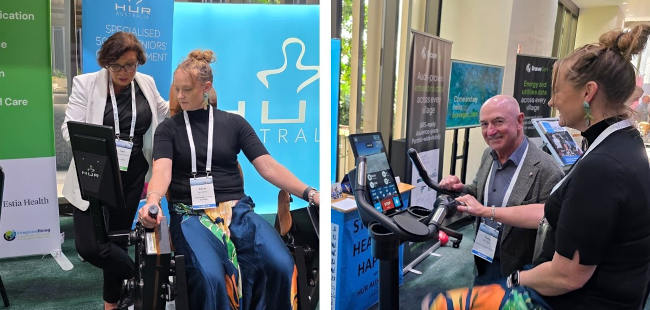
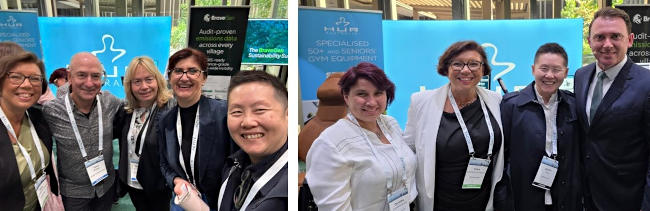
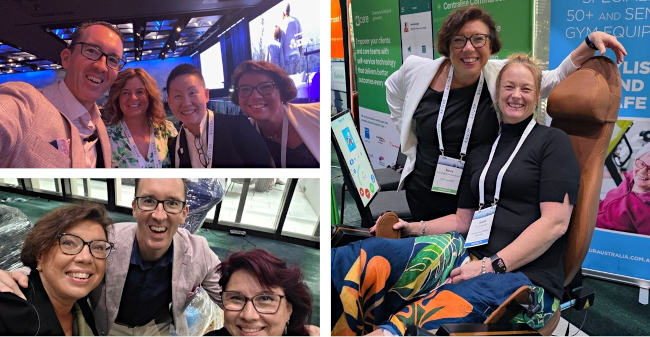
This mindset was clear at our booth, We had so many catch ups with old and new friends, discussing the opportunities the investment in health brings. We all deserve to age with good health, and keep our independence, ageing the way we wish.
The understanding of the principles of health and wellness, affect many aspects of the retirement industry; the built environment and community, programs, policies, staffing models, dining, and services.
As the knowledge, and understanding and implementation of health and reablement driven principles increase, older adults are no longer looking for care, rather they are looking for models of living options where they can live better and longer, with greater purpose, vitality, and connection.
Best Wishes,
Dr Tuire Karaharju-Huisman
Physiotherapist, Accredited Exercise Physiologist (ESSAM), PhD (Biomechanics)
Research Lead, Area Account Manager (Vic, Tas, SA, ACT, WA, NT)
